
Quick answer
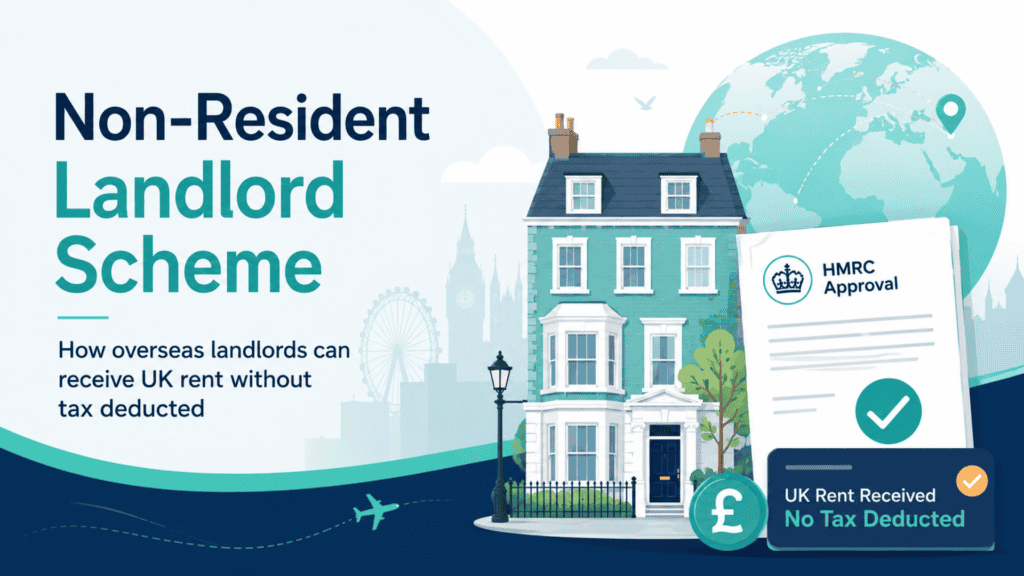
If you live abroad and receive UK rental income, the Non-Resident Landlord Scheme can help your agent or tenant pay rent to you without deducting tax first, once HMRC approves your application. However, it does not make the rent tax-free. It only changes when and how HMRC collects the tax.
If you own a UK rental property but live overseas, the UK tax position does not disappear just because you have left the country.
One of the key HMRC rules to understand is the Non-Resident Landlord Scheme, often shortened to NRLS or NRL.
The scheme applies where a landlord receives UK rental income and has their usual place of abode outside the UK. In practice, this often affects landlords who live abroad for 6 months or more each year while still renting out UK property.
For many overseas landlords, applying for the scheme can make a real difference to cash flow.
Without HMRC approval, your letting agent or tenant may need to deduct tax before they pay rent to you. With approval, they can usually pay your UK rent without deducting tax first.
However, the rent does not become tax-free. Instead, you report the rental income through your UK tax return and pay the right amount of tax after calculating the rental profit.
At a glance
Paid gross: HMRC approval can allow your agent or tenant to pay rent without deducting tax first.
Cash flow: you keep more control over your rental income during the year.
Still taxable: NRLS approval does not remove the need to report UK rental income.
Cleaner admin: approval gives agents and tenants clearer HMRC instructions.
What this guide covers
- What the Non-Resident Landlord Scheme is
- Who counts as a non-resident landlord
- Why overseas landlords should register
- Receiving rent without tax deducted upfront
- Improving cash flow
- Paying tax based on actual rental profit
- Keeping your UK tax affairs cleaner
- Which HMRC form you need
- What happens after HMRC approval
- The common agent mistake
- FAQs
What is the Non-Resident Landlord Scheme?
The Non-Resident Landlord Scheme is a UK tax system for rental income paid to landlords who live outside the UK.
If a landlord’s usual place of abode is outside the UK, their UK letting agent will usually need to operate the scheme. If there is no letting agent, the tenant may need to operate it instead, depending on the amount of rent paid.
The key difference
Plain English point: without HMRC approval, your agent or tenant may deduct tax before the rent reaches you. With HMRC approval, they can usually pay the rent gross, and you then deal with the tax through your UK tax return.
As a result, the scheme matters for expats, overseas investors, globally mobile professionals and former UK residents who keep a UK property after moving abroad.
Who counts as a non-resident landlord?
For the purposes of the scheme, a non-resident landlord is someone who receives UK rental income and whose usual place of abode is outside the UK.
This can include:
- individuals
- companies
- trustees
- partnerships
NRLS is not always the same as tax residence
This point matters. NRLS status is not always exactly the same as tax residence under the Statutory Residence Test. HMRC can treat someone as having a usual place of abode outside the UK even where their wider tax residence position needs a separate review.
Therefore, you should not treat the scheme as just an expat form. It is a practical HMRC process with real cash-flow consequences.
Why should overseas landlords register?
The main benefit is simple: HMRC approval can allow your agent or tenant to pay your UK rent without deducting tax first.
For many landlords, that means better control over monthly income and fewer cash-flow problems.
Below are the main reasons to consider applying.
1. You can receive your rent without tax being deducted first
Without NRLS approval, a letting agent or tenant may need to deduct UK tax before paying rent to an overseas landlord.
That means less money may arrive in your account each month.
Example
- Monthly rent: £2,000
- Without approval: the agent may deduct tax before payment
- With HMRC approval: the agent can usually pay rent without deducting UK tax first
Important: without tax deducted at source does not mean without UK tax. You still need to report the rental income correctly and pay any UK tax due.
2. It can improve cash flow
This is often the biggest practical advantage.
If your agent deducts tax before you receive the rent, you may have to wait until your Self Assessment tax return is filed and processed before HMRC corrects any overpayment.
That can be frustrating, especially where your rental profit is much lower than the rent collected.
Receiving the rent gross can help you manage:
- mortgage payments
- repairs and maintenance
- letting agent fees
- insurance
- service charges
- travel costs
- wider investment plans
- overseas living costs
For landlords living abroad, stable cash flow can matter just as much as the final tax calculation.
3. You pay tax based on the actual rental profit
UK rental tax is not based simply on the full rent collected. In broad terms, it is based on rental profits after allowable expenses.
Your final tax position may need to include:
- repairs and maintenance
- insurance
- letting agent fees
- service charges
- accountancy fees
- replacement of domestic items, where the rules allow
- mortgage interest relief, where relevant
Therefore, some landlords may owe less tax than the amount that would otherwise be deducted during the year.
NRLS approval can help prevent too much tax being deducted upfront and corrected only later through Self Assessment.
4. It keeps your UK tax affairs cleaner
Registering for the scheme helps show HMRC that you are dealing with your UK rental income properly.
That matters because HMRC still expects you to report UK rental income where required, even if you live overseas.
A clean NRLS position can help show that:
- HMRC knows about your overseas landlord position
- you are dealing with UK rental income transparently
- your agent or tenant has clear instructions from HMRC
- you are managing your UK tax affairs properly
- you can report your rental income through the correct route
This does not remove the need for a tax return. However, it can reduce confusion and avoid unnecessary problems.
5. It simplifies things for letting agents and tenants
Once HMRC approves the application, it tells the letting agent or tenant that they can pay rent without deducting tax.
This helps because agents and tenants should not rely only on a landlord saying they do not need to deduct tax. They need the correct HMRC approval.
Once that approval is in place, the process becomes clearer for everyone involved.
For landlords using a letting agent, this can make the property management process much smoother.
Registering does not mean avoiding UK tax
This point needs to be clear.
NRLS approval does not make UK rental income tax-free.
Instead, it changes the timing and method of collection.
Without approval
Your agent or tenant may deduct tax before paying rent to you.
With approval
You receive the rent first. Then, you report the income through your UK tax return and pay any tax due after calculating the correct rental profit.
So, the scheme is not a loophole. It is a cash-flow and compliance mechanism. For many overseas landlords, that distinction is extremely important.
Who should usually consider applying?
You should normally consider the Non-Resident Landlord Scheme if you:
- live outside the UK for 6 months or more
- rent out UK property
- use a UK letting agent
- receive rent directly from a UK tenant
- want to avoid unnecessary tax deductions upfront
- expect your actual tax bill to be lower than automatic deductions
- want clearer administration with HMRC, agents and tenants
- want better control over rental cash flow
Most eligible overseas landlords choose to apply because the practical benefits are clear.
Which HMRC form do you need?
The correct form depends on who owns the property.
NRL1: for individuals.
NRL2: for companies.
NRL3: for trusts.
Joint ownership needs care
Joint owners need to review their positions separately because each person may need their own approval.
For example, if two individuals living overseas own a property jointly, each landlord may need approval for their share of the rental income.
What happens after HMRC approval?
Once HMRC approves the application, it tells the letting agent or tenant that they can pay the landlord without deducting UK tax first.
From that point, the landlord can normally receive rent gross.
Keep good records
You still need to keep records of:
- rental income received
- letting agent statements
- repairs and maintenance costs
- mortgage interest information
- insurance costs
- service charges
- professional fees
- periods when the property was empty
- capital improvements or major works
These records will help when you prepare your UK tax return.
Common mistake: assuming the agent has dealt with everything
Many overseas landlords assume their letting agent has taken care of the tax position.
That is risky.
A letting agent may operate the deduction process. However, the agent is not responsible for preparing your UK tax return, calculating your final tax position, claiming all relevant expenses, or reviewing your wider expat tax position.
You should still make sure your own tax affairs are correct.
This is especially important if you:
- have more than one UK property
- own the property jointly
- moved abroad during the tax year
- are unsure whether split-year treatment applies
- have overseas income as well as UK rental income
- are considering selling the UK property
- have mortgage interest or refinancing issues
- are unsure whether you need to file a UK tax return
Planning to rent out UK property while living abroad?
At Expat Tax Advice, we help overseas landlords deal with the Non-Resident Landlord Scheme clearly and efficiently.
We can help you:
- check whether the scheme applies to you
- complete the correct NRL application
- deal with HMRC correspondence
- liaise with your letting agent where needed
- understand your UK rental income reporting position
- prepare for Self Assessment
- avoid unnecessary deductions and cash-flow problems
If you own UK rental property and live abroad, it is worth getting the NRL position right from the start.
Email: info@expat-tax-advice.co.uk
Website: www.expat-tax-advice.co.uk
Phone: +44 1249 816 810
FAQs about the Non-Resident Landlord Scheme
These answers are general guidance only. The right treatment depends on your ownership structure, overseas position, UK rental income and wider tax circumstances.
What is the Non-Resident Landlord Scheme?
The Non-Resident Landlord Scheme is an HMRC system for collecting tax on UK rental income paid to landlords whose usual place of abode is outside the UK. It often applies where someone lives abroad but continues to rent out UK property.
Does the Non-Resident Landlord Scheme mean I do not pay UK tax?
No. NRLS approval does not mean your UK rental income is tax-free. It usually means your rent can be paid without tax being deducted upfront, with the final tax position dealt with through your UK tax return.
What happens if I do not register for the Non-Resident Landlord Scheme?
If HMRC has not approved you to receive rent without tax deducted, your letting agent or tenant may need to deduct UK tax before paying rent to you.
Can I receive my UK rent in full if I live abroad?
You may be able to receive your UK rent without tax deducted at source if HMRC approves your NRLS application. You still need to report the rental income correctly and pay any UK tax due.
Which form should I use for the Non-Resident Landlord Scheme?
Individuals usually use form NRL1. Companies use NRL2. Trusts use NRL3. The correct form depends on who owns the property and receives the rental income.
Do joint owners need separate NRL approval?
Often, yes. Joint owners are generally considered separately for their share of the rental income, so each person’s position should be reviewed.
Do I still need to complete a UK tax return as a non-resident landlord?
In many cases, yes. Receiving rent without tax deducted does not remove the need to report UK rental income. The final tax position is normally dealt with through Self Assessment.
Should I apply before or after renting out the property?
Ideally, you should deal with the NRLS position as early as possible, preferably before rental payments begin. This can help avoid unnecessary deductions and admin problems later.
This article is for general information only and should not be treated as personal tax advice. UK rental income, the Non-Resident Landlord Scheme, Self Assessment and overseas landlord tax positions are fact-specific. The correct treatment will depend on your circumstances.